Insights on AI-Native Security Operations

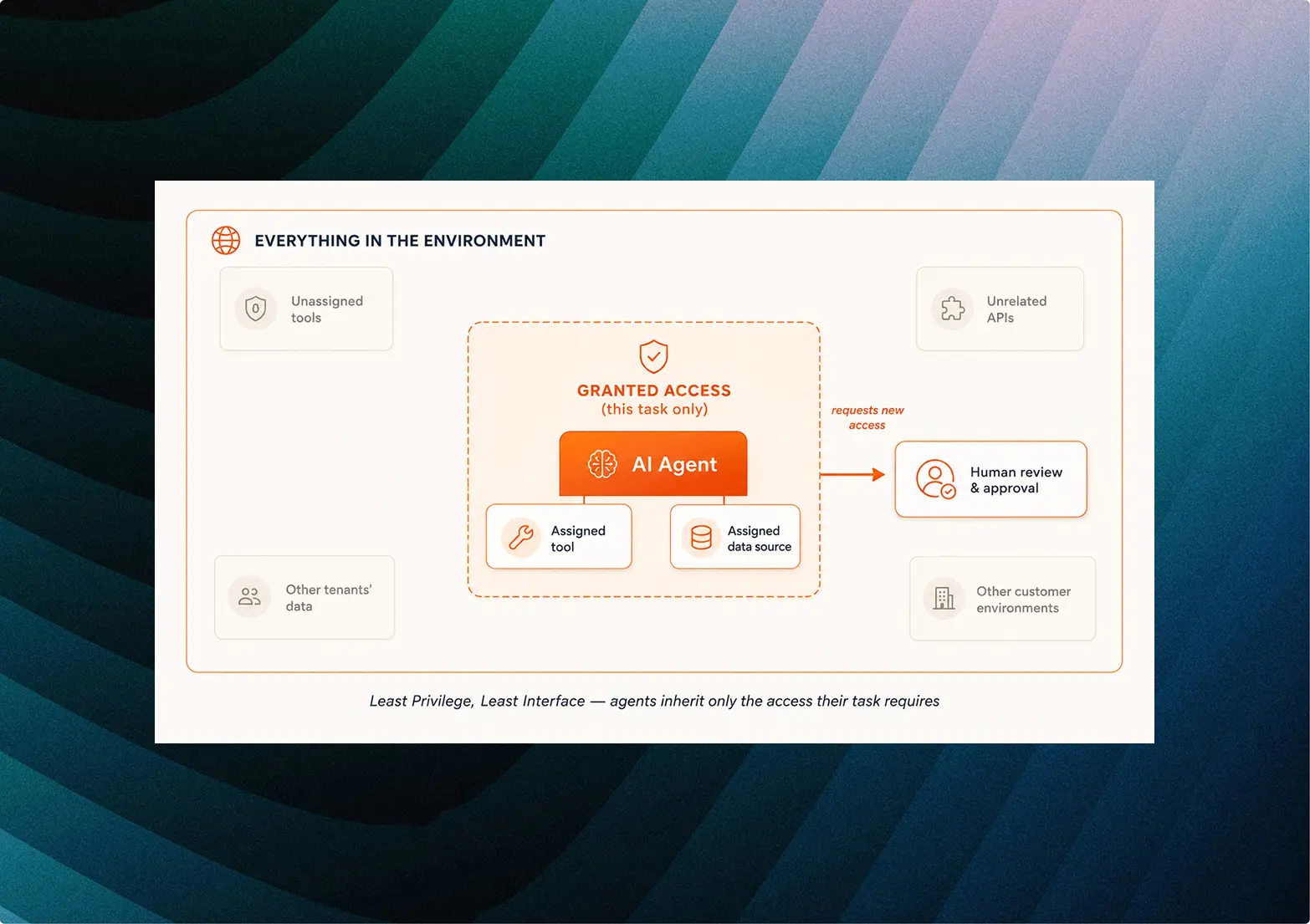
Least privilege diagram for AI agents: the agent gets access only to its assigned tool and data source for one task, shown on a dark teal background.

All Articles

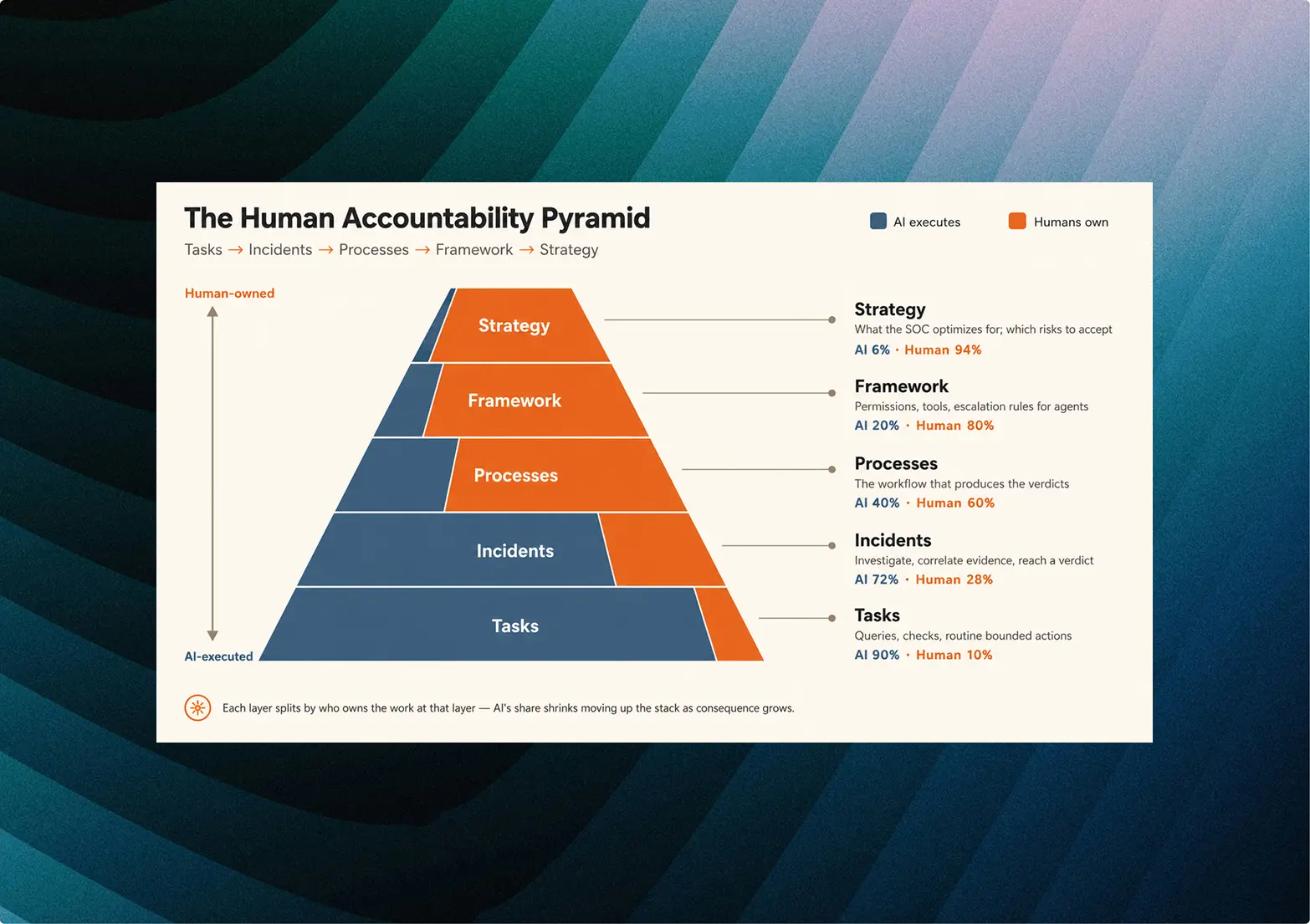
The Human Accountability Pyramid for an AI-driven SOC, shown on a dark teal background. AI executes the tasks at the base, while humans own the strategy at the top.
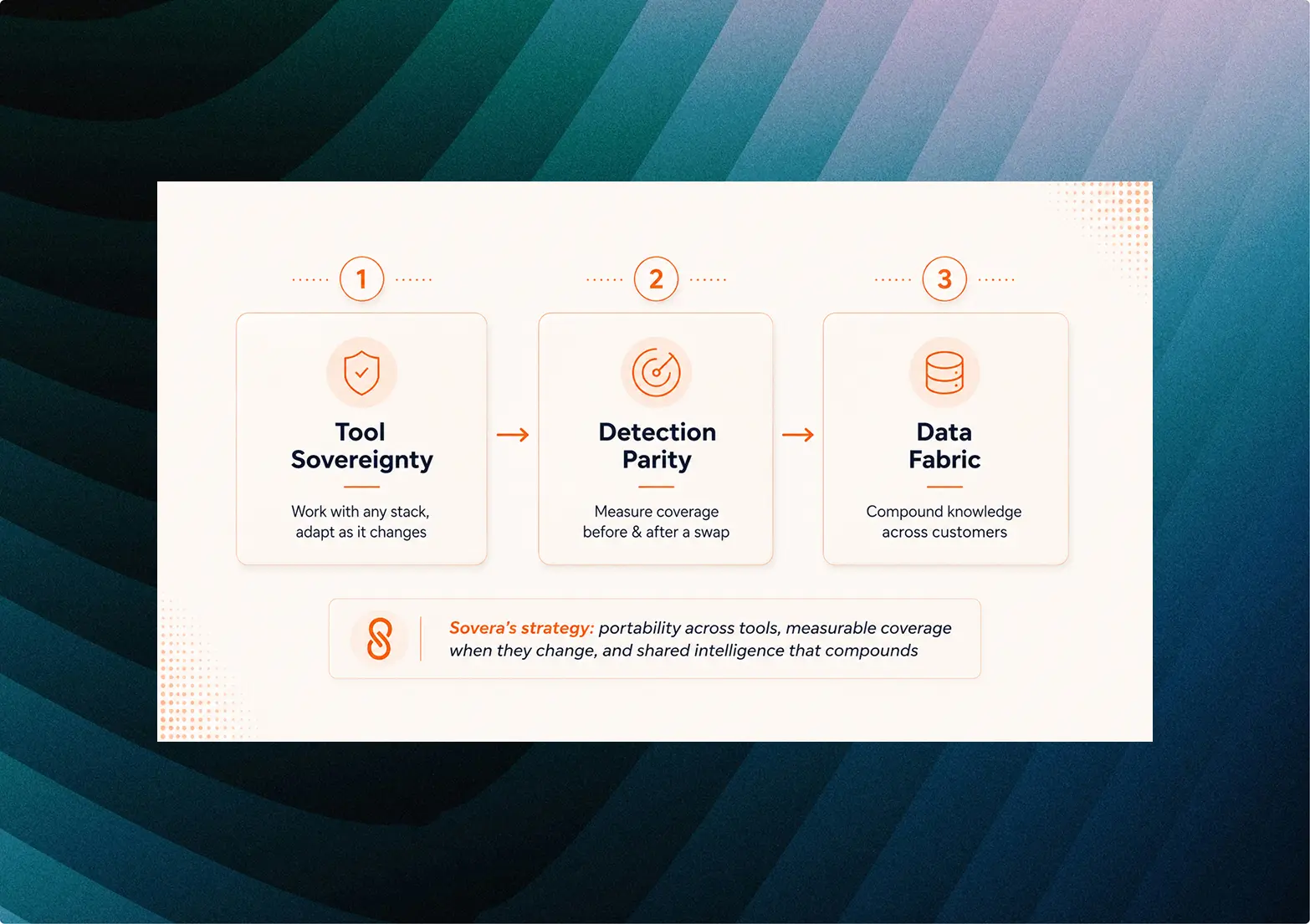
Sovera’s three-part strategy for sovereign security operations: tool sovereignty, detection parity and a shared data fabric, shown on a dark teal background.
Least privilege diagram for AI agents: the agent gets access only to its assigned tool and data source for one task, shown on a dark teal background.
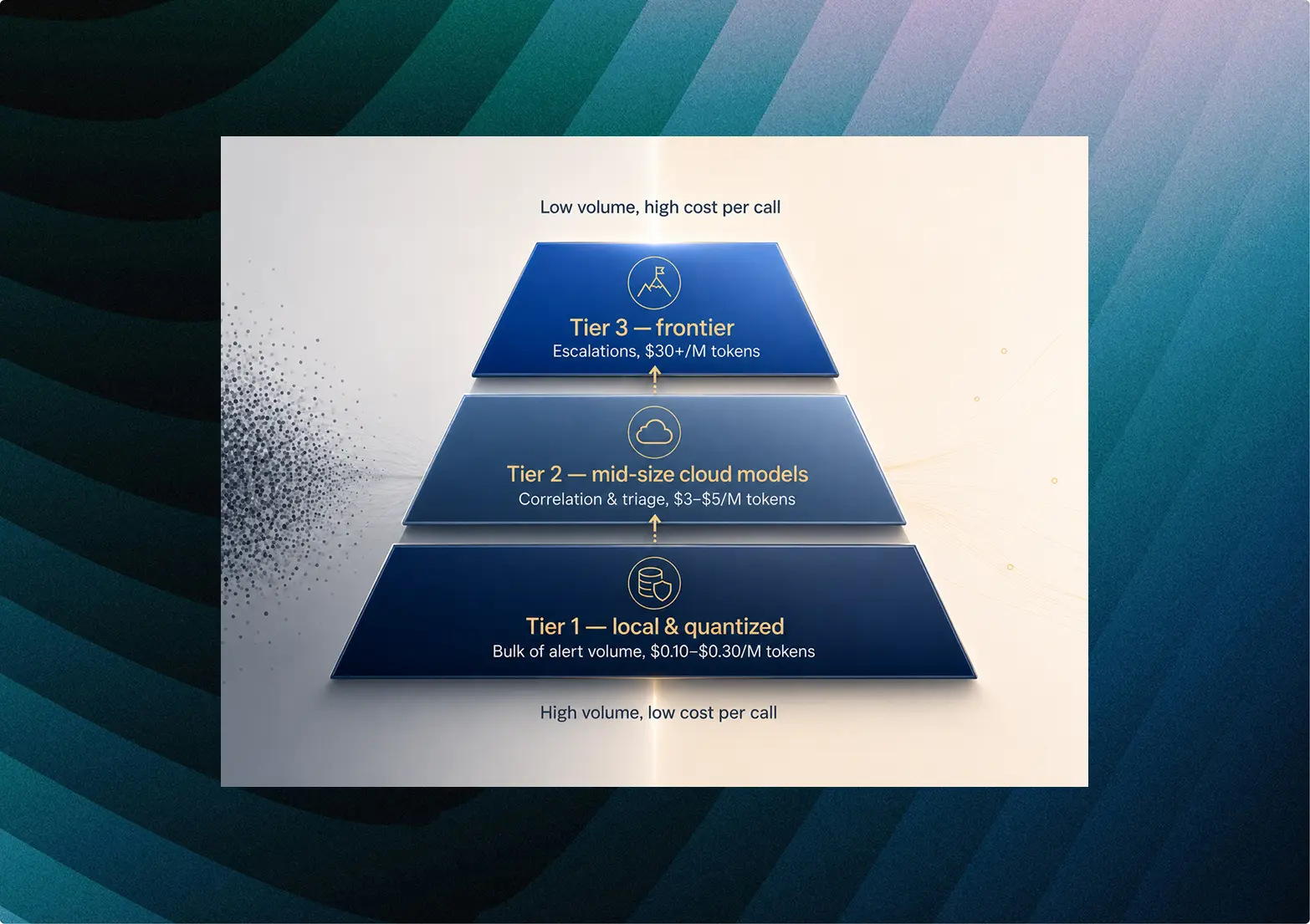
Three-tier model pyramid for AI-driven alert handling: local quantized models for bulk volume at the base, mid-size cloud models for correlation and triage, and frontier models for escalations, shown on a dark teal background.
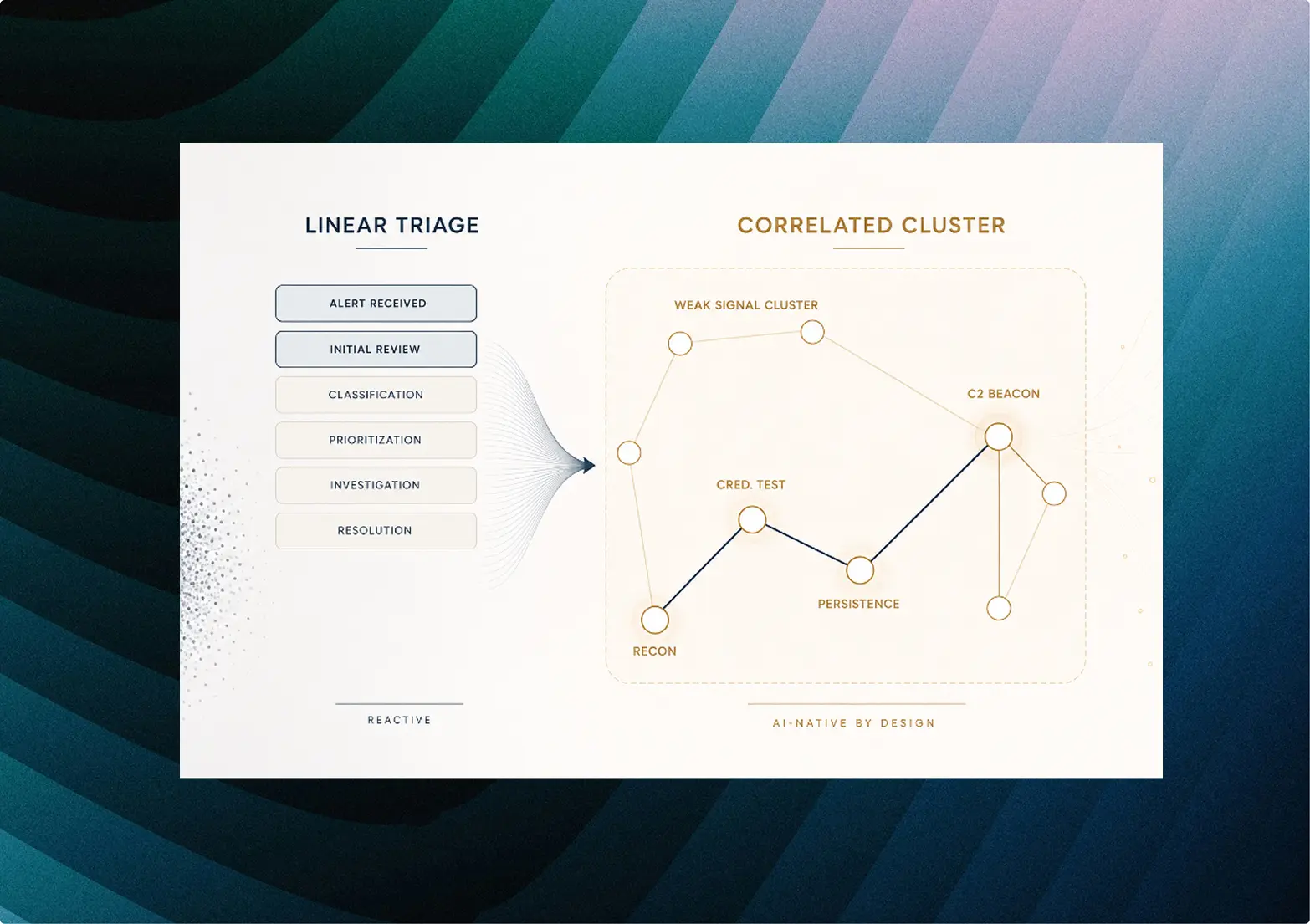
Linear triage compared with a correlated cluster: a reactive step-by-step alert pipeline on the left, and an AI-native view on the right that links weak signals from recon to a C2 beacon, shown on a dark teal background.
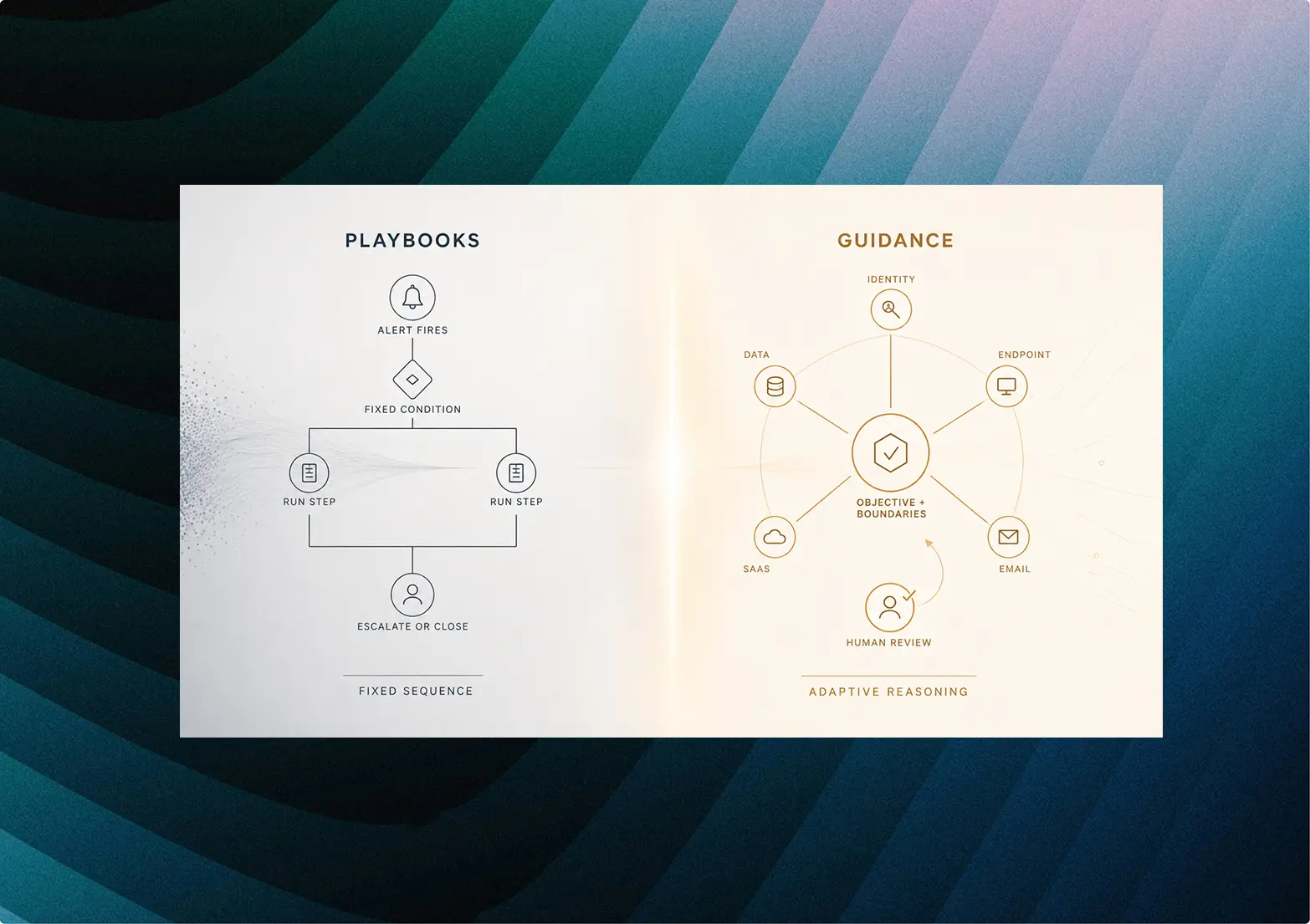
Playbooks versus guidance: a fixed sequence of steps from alert to escalation on the left, and adaptive reasoning around an objective, boundaries and human review on the right, shown on a dark teal background.
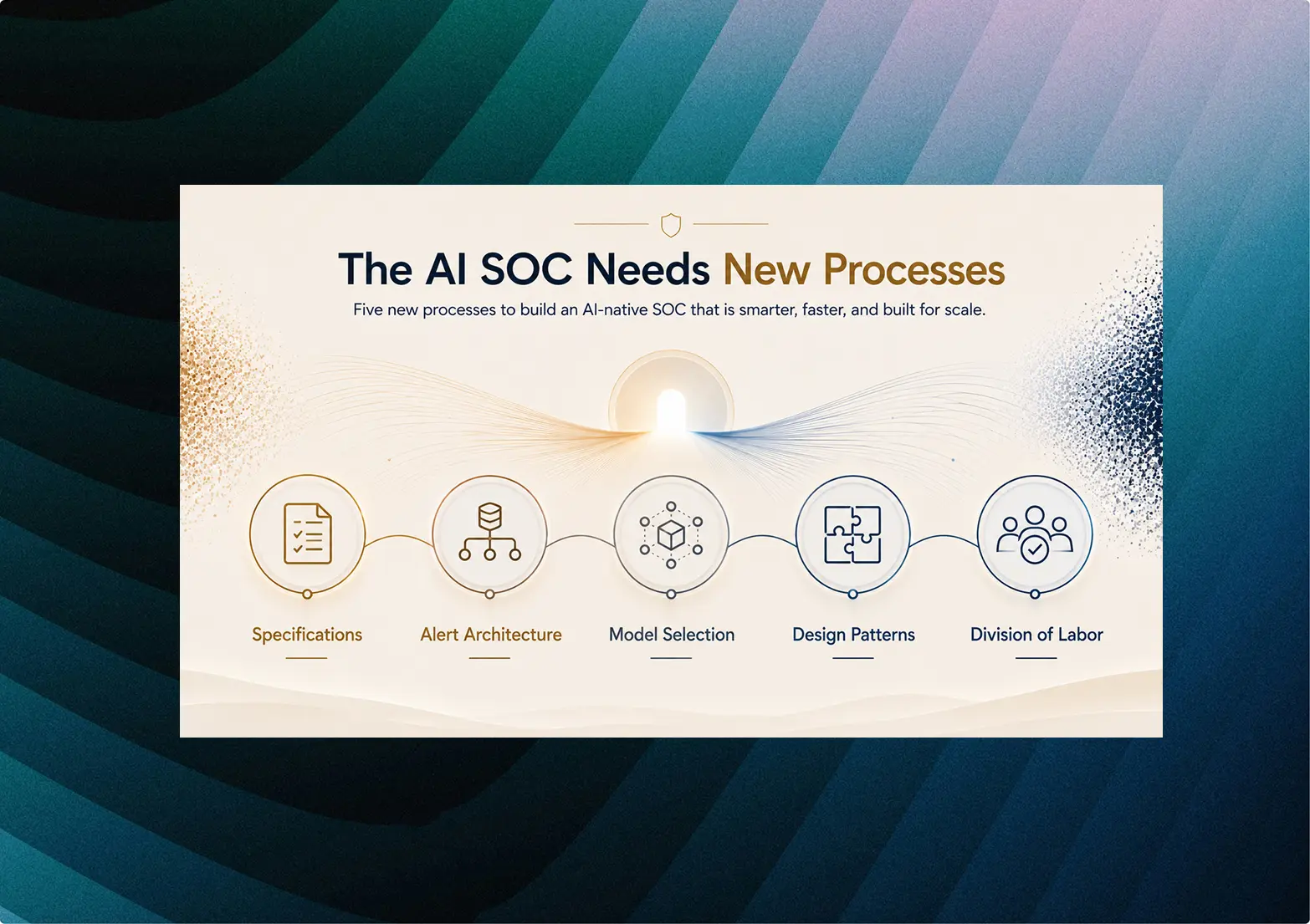
The AI SOC Needs New Processes: five processes for building an AI-native SOC, from specifications and alert architecture to model selection, design patterns and division of labor, shown on a dark teal background.
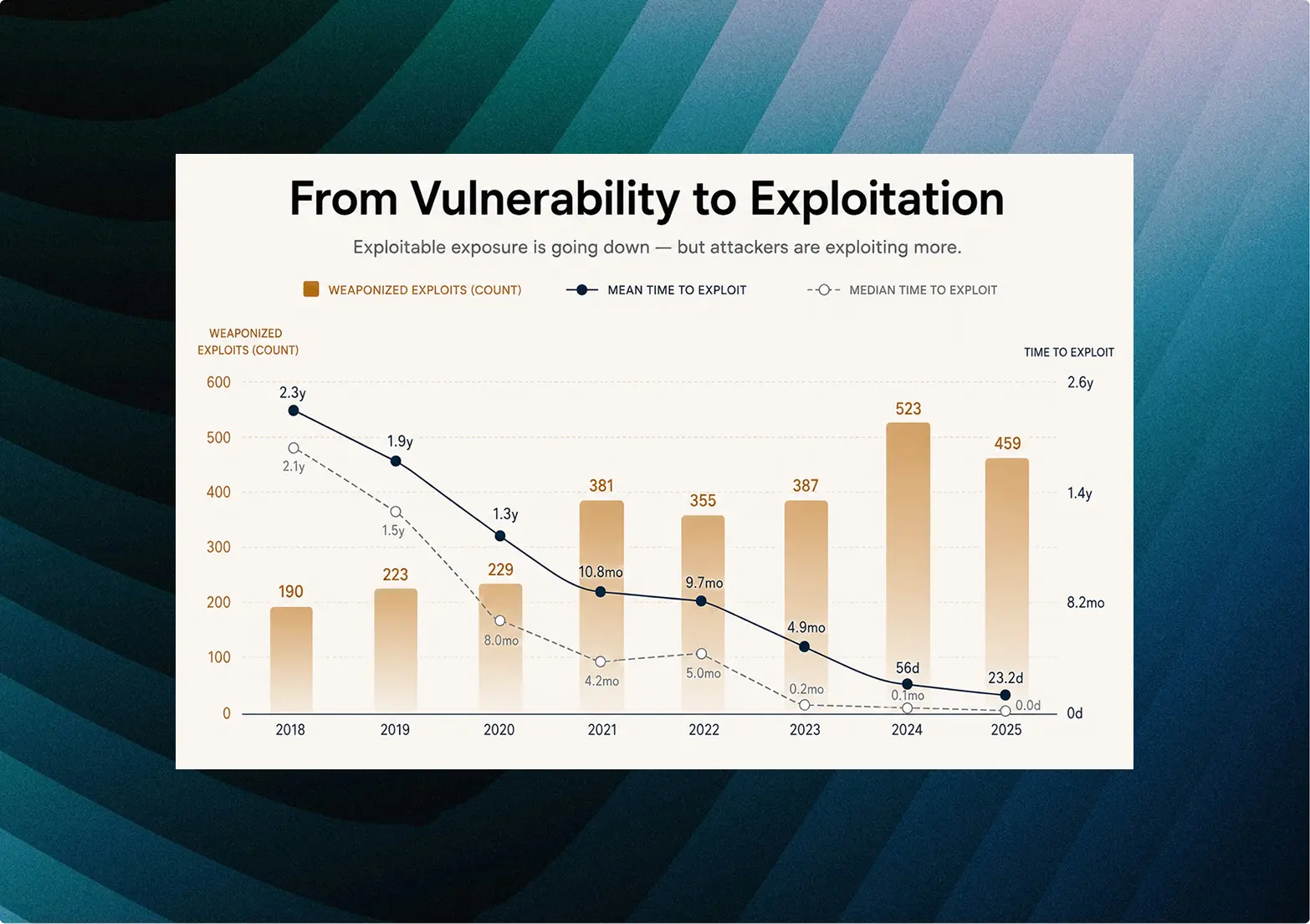
From Vulnerability to Exploitation: weaponized exploits rose from 190 in 2018 to 459 in 2025, while mean time to exploit fell from 2.3 years to 23 days, shown on a dark teal background.
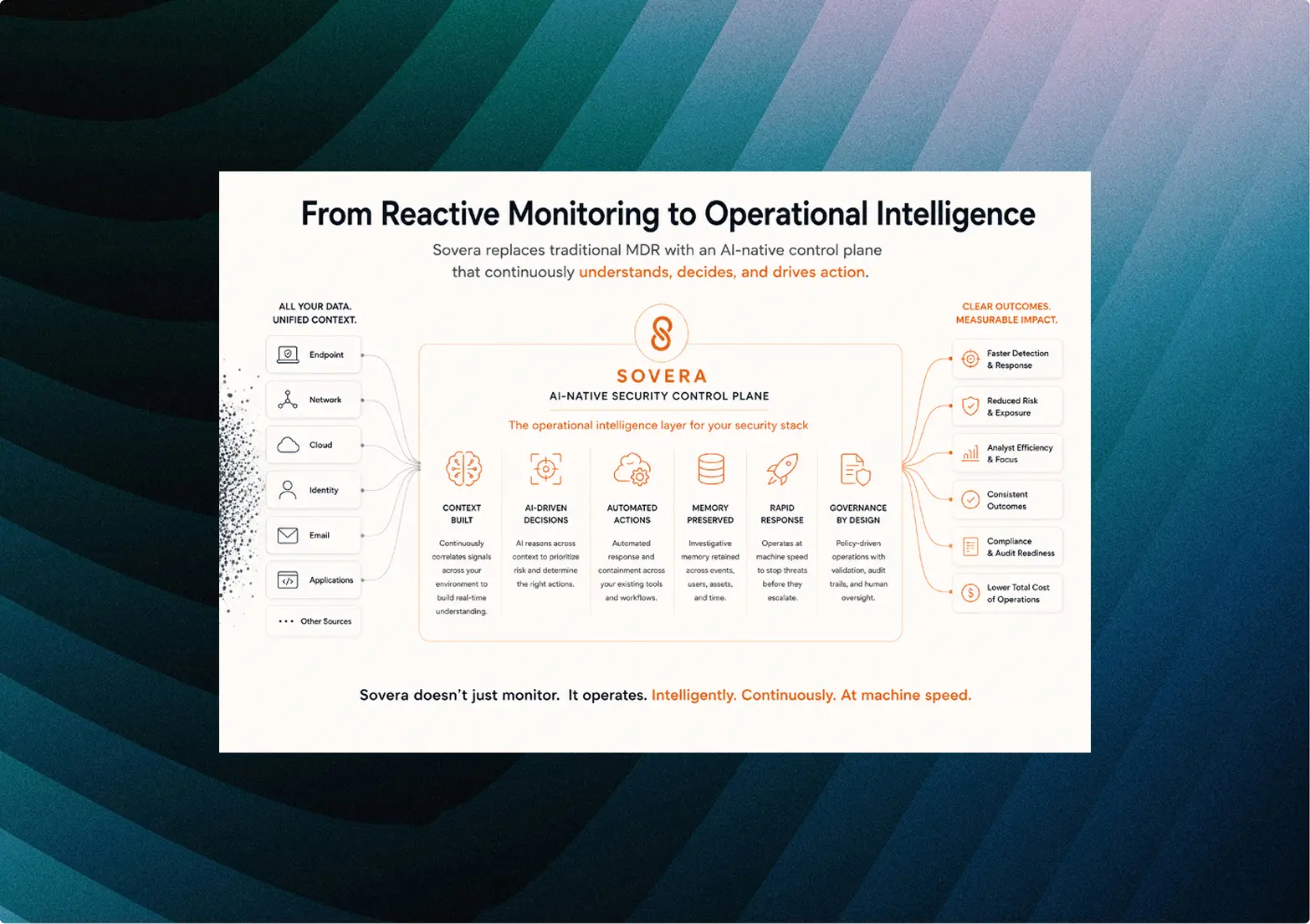
From Reactive Monitoring to Operational Intelligence: Sovera’s AI-native security control plane unifies data from endpoint, network, cloud, identity, email and applications and delivers measurable outcomes, shown on a dark teal background.
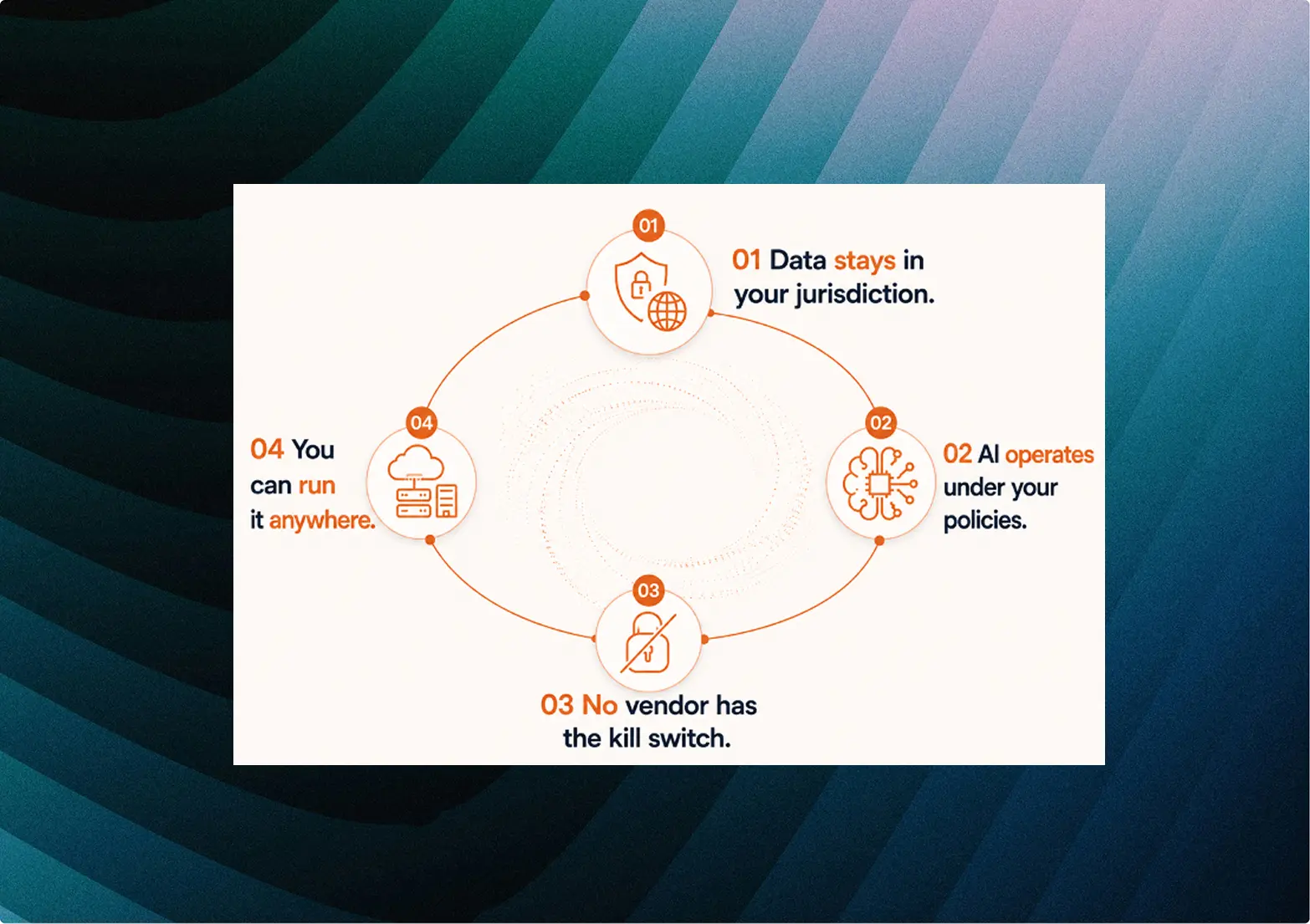
Four principles of sovereign security operations: data stays in your jurisdiction, AI operates under your policies, no vendor has the kill switch and you can run it anywhere, shown on a dark teal background.